What it is
The Omizutori is part of the Shuni-e, a two-week Buddhist rite of repentance held at Nigatsu-dō Hall in Tōdai-ji, the temple of Nara’s Great Buddha. Eleven monks pray day and night for the peace and happiness of the nation. Tōdai-ji says the rite has been held every year since 752, the year the Great Buddha was dedicated.
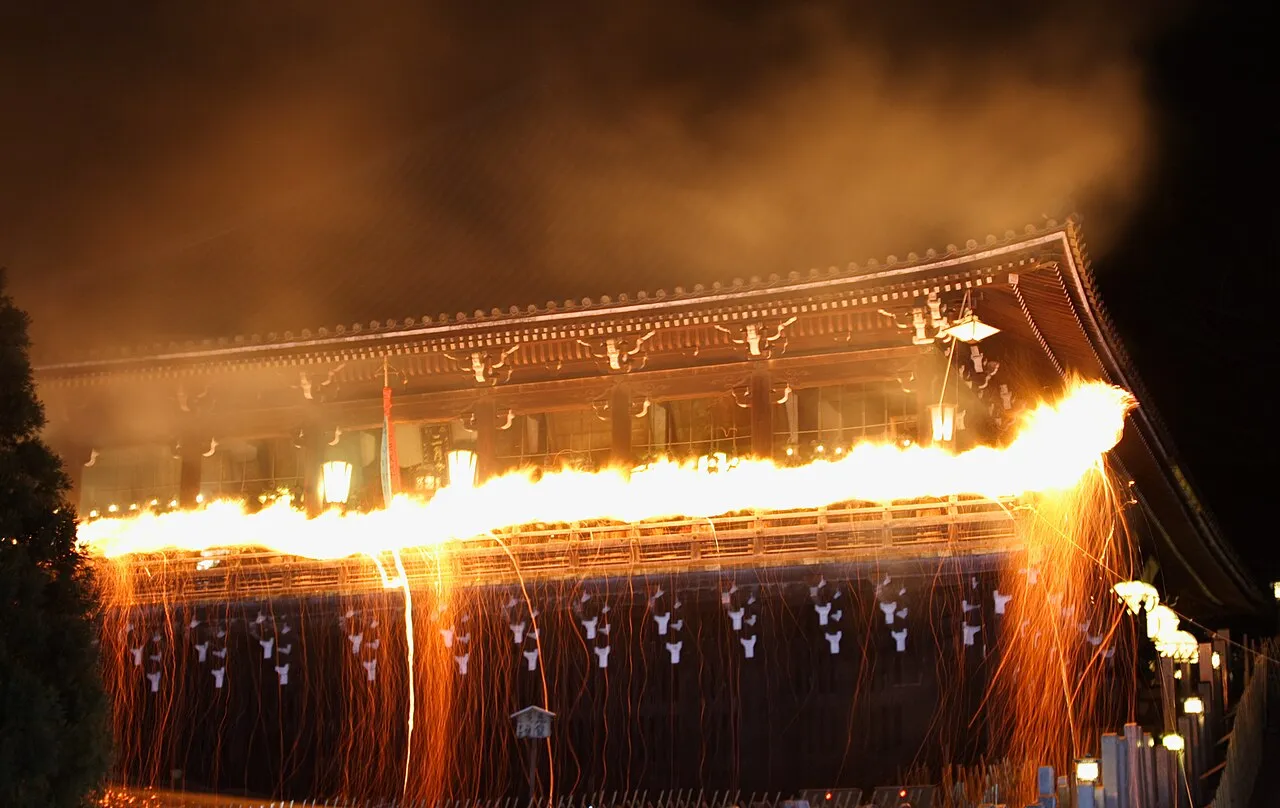
For visitors, the moment to see is the otaimatsu. Every evening, attendants carry huge flaming torches up the stairs of the hall to light the monks’ way, then run them along the balcony, showering sparks over the crowd.
Spring comes after the fire
The name Omizutori, “water drawing”, comes from a rite in the early hours of March 13, when monks draw sacred water from a well beneath the hall. People in Nara say that spring arrives only when the Omizutori is over.
The festival at a glance
| Date | What happens |
|---|---|
| Mar 1–11, 13 | Otaimatsu torches: From 19:00, ten torches are carried up to the balcony, about 20 minutes |
| Mar 12 | The largest torches: From 19:30, eleven huge basket torches, about 45 minutes |
| Mar 13, about 1:30 | Drawing the sacred water: Monks draw water from the Wakasa well in the small hours; the rite that gives the event its name |
| Mar 14 | Final night: From 18:30, ten torches line the balcony at once, about 10 minutes |
Which day should you go?
Any evening, Mar 1–11
The same fire ritual with far smaller crowds. You can stand close below the balcony.
Mar 12
The biggest torches of the fortnight. Viewing areas fill hours ahead and are tightly controlled.
Mar 14
All ten torches blaze along the balcony together for a few minutes.
What to look for
The torches
Each otaimatsu is a bundle of cypress and bamboo up to 8 meters long. Monks carry them up the covered stairs and swing them over the balcony rail.
Falling sparks
Embers rain down on the crowd below. They are said to protect against illness for the year.
The hall
Nigatsu-dō stands on a hillside above the Great Buddha Hall. Come early to see the view over Nara at sunset.
Practical tips
- Cold. Early March evenings in Nara are cold. Dress warmly and wear sturdy shoes for the hillside.
- Timing. Torch times are fixed each year by the temple. Check Tōdai-ji's announcement in February.
- Combine. Visit the Great Buddha Hall and Nara Park's deer in the afternoon before the torches.
Glossary
Taimatsu松明
A torch made from bundled wood or bamboo. Giant taimatsu are the centerpiece of fire festivals such as the Omizutori.
Matsuri祭り
A Japanese festival, usually held for the kami of a local shrine. The word comes from the idea of serving and entertaining the gods.
References
- Nara City Tourism Association: Tōdai-ji Nigatsu-dō Shuni-e (Omizutori), https://www.nantokanko.jp/gyoji/730.html
- Tōdai-ji, official website: Shuni-e schedule.
Last checked 2026-10-12.