What it is
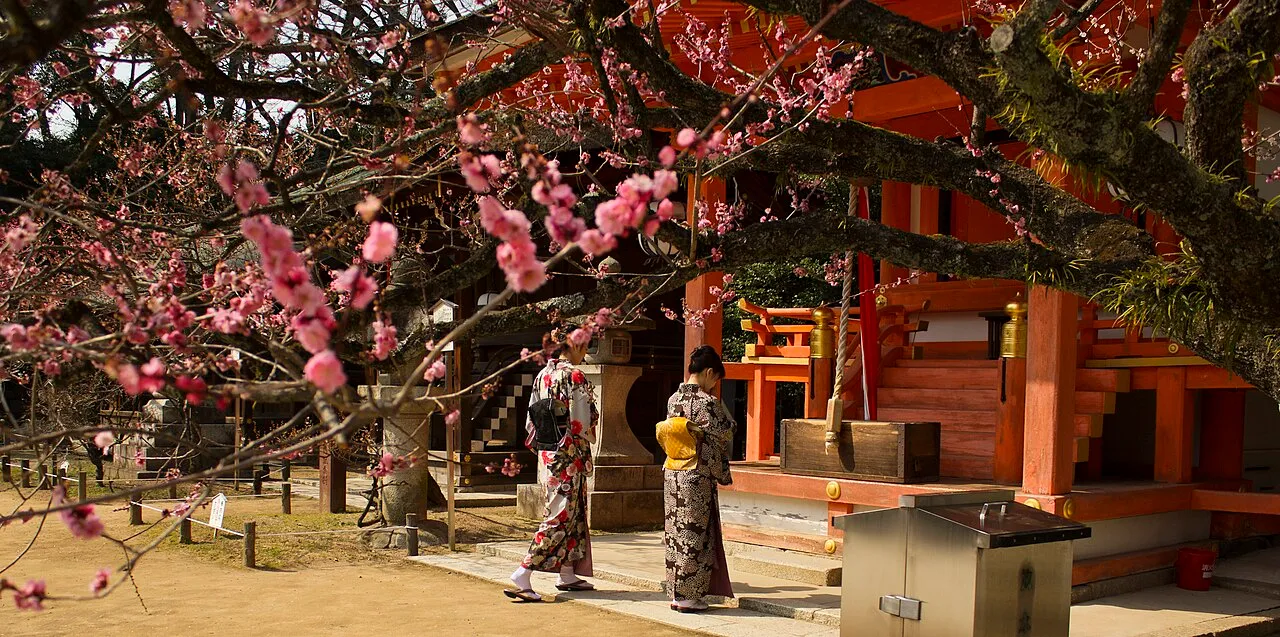
Kitano Tenmangū is the Kyoto shrine of Tenjin, the deified scholar Sugawara no Michizane, who loved plum trees. February 25 is the anniversary of his death, and the shrine marks it with the Baikasai, the plum blossom festival, as the first plums open in its gardens.
The festival is best known for its nodate, an open-air tea ceremony. It recalls the Great Kitano Tea Ceremony that the warlord Toyotomi Hideyoshi held at the shrine in 1587. Today the geiko and maiko of Kamishichiken, Kyoto’s oldest geisha district, serve whisked matcha and sweets among the blossoms.
The 25th of every month
The 25th of each month is Tenjin’s day. On every 25th, hundreds of stalls selling antiques, old kimono, food and plants fill the shrine grounds for the Tenjin-san market. In February the market and the plum festival happen together.
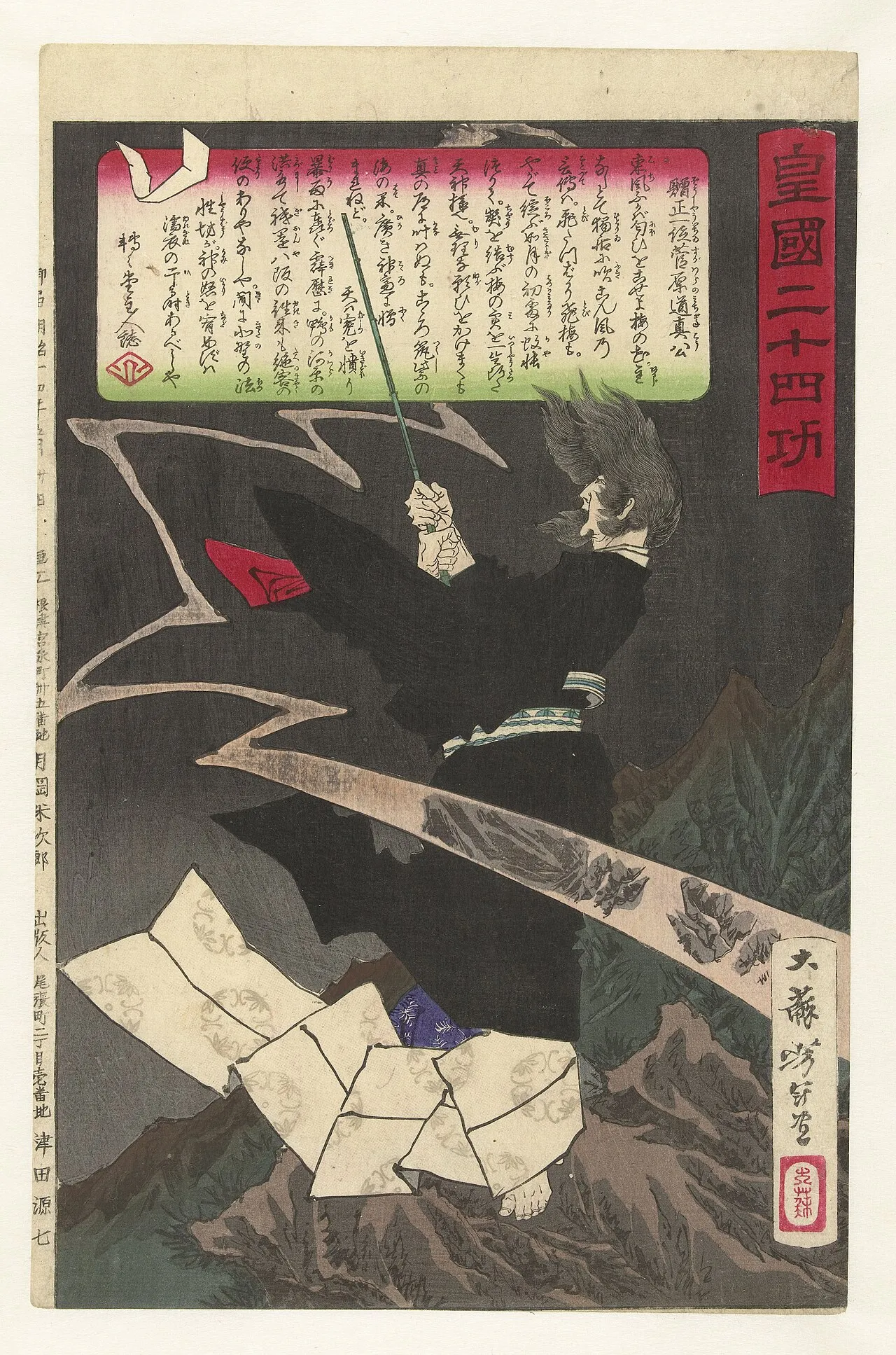 Kami of this festivalTenjinA brilliant scholar who died in exile and was feared as an angry spirit, then honored as a kami. Today Tenjin is the god of learning, and students pray to him before exams. Read the story →
The festival at a glance
| Date | What happens |
|---|---|
| Feb 25 morning | Baikasai ritual: Offerings of plum blossoms and rice are presented to the kami in the main hall |
| Feb 25, 10:00–15:00 | Open-air tea ceremony: Geiko and maiko of Kamishichiken serve matcha and sweets in the plum garden (ticket required) |
| Feb 25, all day | Tenjin-san market: The monthly flea market fills the streets around the shrine |
Which day should you go?
Feb 25, morning
Arrive early for the tea ceremony, then browse the flea market and the plum garden before the midday crowds.
A weekday in late February
The plum garden is open from early February into March. Without the festival, you can enjoy the blossoms in peace.
What to look for

Kamishichiken
Kyoto's oldest geisha district lies just east of the shrine. Its geiko and maiko serve the tea.
The plum garden
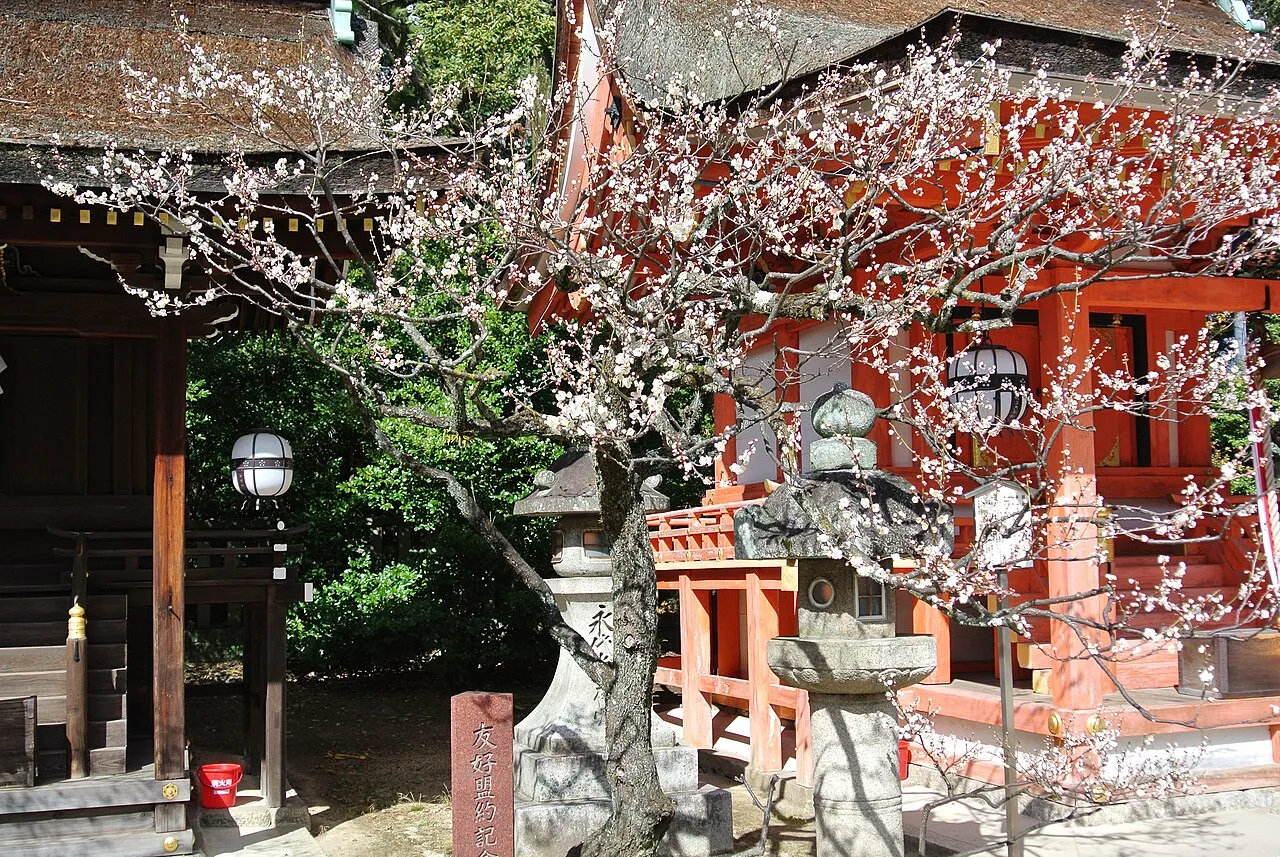
About 1,500 trees of some 50 varieties, from early red plums to rare dark-flowered ones.
The ox statues
Rub a bronze ox for wisdom. Tenjin's oxen are found all over the shrine grounds.
Ema for exams
Racks of wooden plaques carry students' wishes to pass their entrance exams, which take place in the same weeks.
Practical tips
- Tea tickets. Tickets for the tea ceremony are limited and the price changes from year to year. Check the shrine's website in early February.
- Crowds. Because the festival falls on the 25th, it coincides with the Tenjin-san market and is very busy.
- Blossoms. Plum blossoms usually peak from mid-February to mid-March, depending on the weather.
Glossary
Nodate野点
An open-air tea ceremony, held outdoors among flowers or trees.
Ema絵馬
A small wooden plaque on which visitors write a wish and hang it at the shrine. Exam wishes fill the racks at Tenmangū shrines.
Omamoriお守り
A small cloth charm sold at shrines and temples for protection, health, safe travel or success. Keep it closed and carry it with you.
Matsuri祭り
A Japanese festival, usually held for the kami of a local shrine. The word comes from the idea of serving and entertaining the gods.
References
- Kyoto City official tourism site (Kyoto Kanko Navi): Baikasai, https://ja.kyoto.travel/event/single.php?event_id=2595
- Kitano Tenmangū, official website: Baikasai and plum garden.
Last checked 2026-10-12.